

Introduction
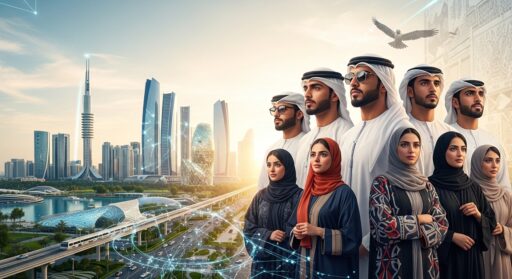
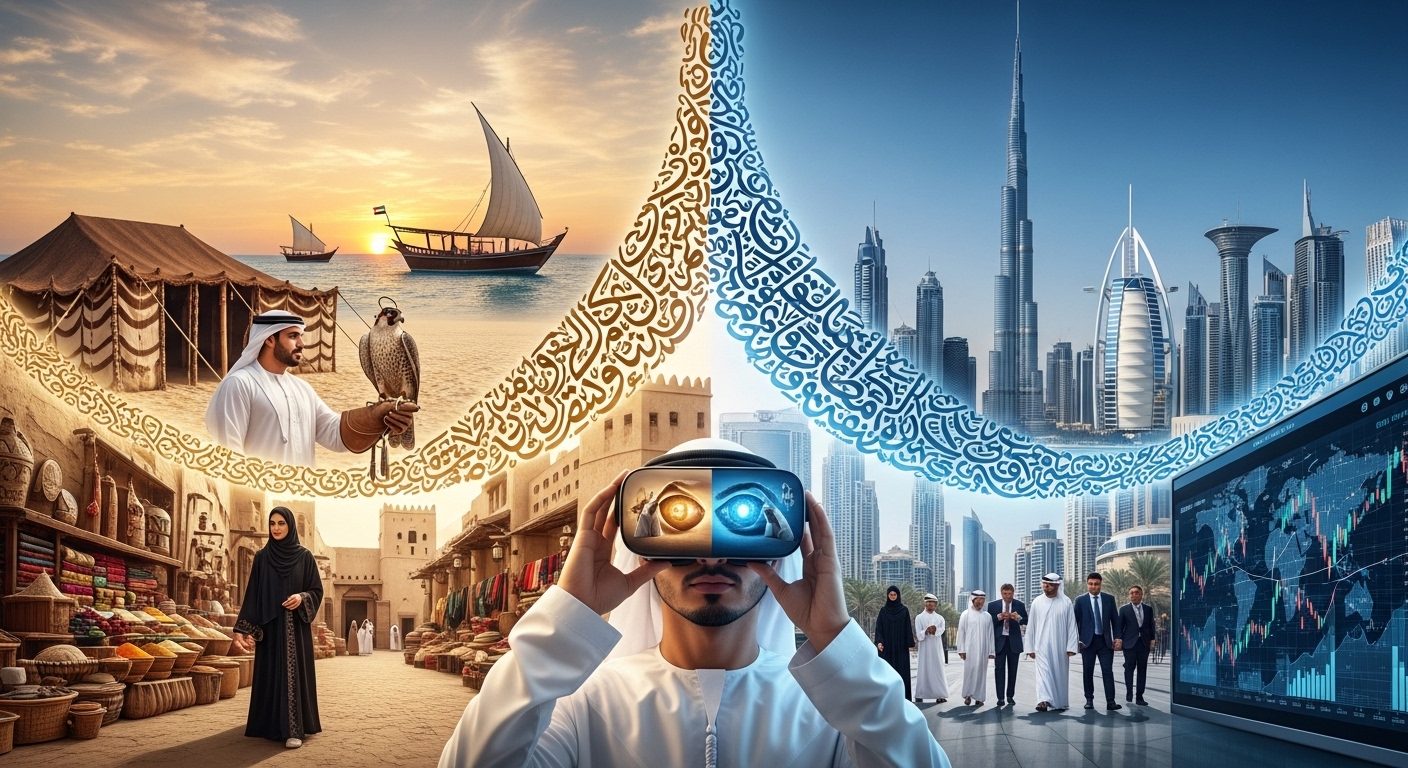
The United Arab Emirates is one of the most globalized nations on earth, a dazzling mosaic of over 200 nationalities living and working in its hyper-modern cities. For Emirati youth, this is the only reality they have ever known. While this exposure offers unparalleled opportunities for learning and growth, it also presents a fundamental challenge: how to remain rooted in a distinct Emirati and Arab-Islamic identity while being constant participants in a global, predominantly Western-influenced, cultural stream. This “balancing act” is a central, defining experience of modern Emirati youthhood, a daily negotiation between the pull of the world and the anchor of home.
History
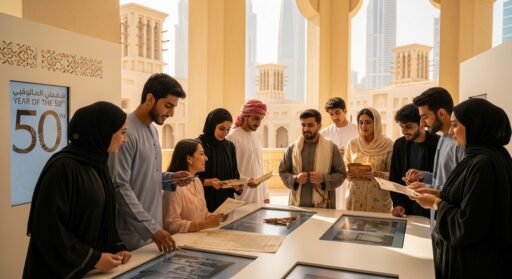
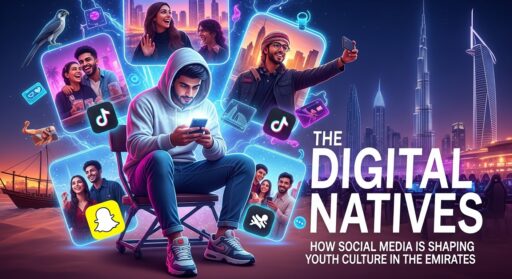
The pace of this globalization has been breathtaking. Within a single generation, the UAE transformed from a collection of quiet sheikhdoms into a global crossroads. Previous generations had a more insulated cultural experience, where traditions were reinforced by a homogeneous social environment. Today’s youth, however, are educated in international schools, consume global media, and have friends from every continent. This constant cultural interaction is unprecedented in the region’s history, forcing a more conscious and deliberate relationship with their own heritage. It is no longer something simply absorbed from the environment; it is something that must be actively learned, practiced, and chosen.
Key Features
This balancing act manifests in various aspects of daily life:
- Language: While Arabic remains the language of identity and religion, English is often the lingua franca of education, business, and socializing with friends. Youth must be fluently bilingual, navigating the different cultural worlds each language represents.
- Fashion and Aesthetics: It is common to see a young Emirati woman wearing an elegant abaya and sheila while carrying a designer handbag, or a young man in a crisp kandura discussing the latest international sneaker release. This fusion of traditional dress with global fashion accessories is a visible symbol of the balance.
- Social Values: Global ideas about individualism, self-expression, and dating coexist, and sometimes conflict, with traditional values emphasizing family, community, and modesty. Youth are constantly finding their own personal equilibrium between these two sets of expectations.
- Consumption and Leisure: Their tastes in food, music, and entertainment are a hybrid of local and global, from enjoying a traditional machboos with family to visiting the latest international fusion restaurant with friends.
Cultural Significance
This ongoing negotiation is not a sign of cultural weakness, but of cultural confidence and adaptability. The fact that Emirati youth can navigate these different worlds with ease is a testament to the strength of their foundational identity. The preservation of core markers—like the national dress, the Arabic language, and respect for religious practices—acts as a stable anchor. This allows them to be selectively open to global influences, adopting what resonates and discarding what does not, without fear of losing themselves. They are not passive recipients of globalization; they are its active curators.
Modern Relevance
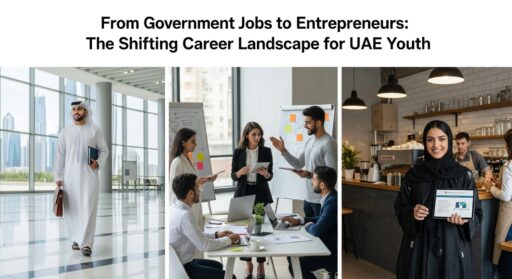
The ability to balance local identity with global competence is a critical national asset. It is the very skill set required for the UAE to succeed as a global hub. It produces diplomats who can navigate international forums, business leaders who can close deals across cultures, and artists who can create work with universal appeal. The government actively supports this balance through policies that mandate the teaching of Arabic and Emirati social studies, and through celebrations of national heritage. The challenge is to ensure that the tools for understanding and valuing their culture are as strong as the tools for engaging with the world, preventing a scenario where globalization leads to cultural dilution.
Conclusion
The balancing act performed by Emirati youth is a sophisticated and modern form of cultural preservation. It moves beyond simply protecting relics of the past to actively integrating heritage into a dynamic, global present. Their identity is not a fragile artifact to be kept under glass, but a living, breathing, and evolving practice. By confidently wearing the kandura in a boardroom, speaking fluent English while reciting classical Arabic poetry, and building tech startups inspired by Bedouin principles of resilience, they are proving that cultural identity and global citizenship are not opposites. They are, in the hands of this generation, two sides of the same, highly valuable coin.